
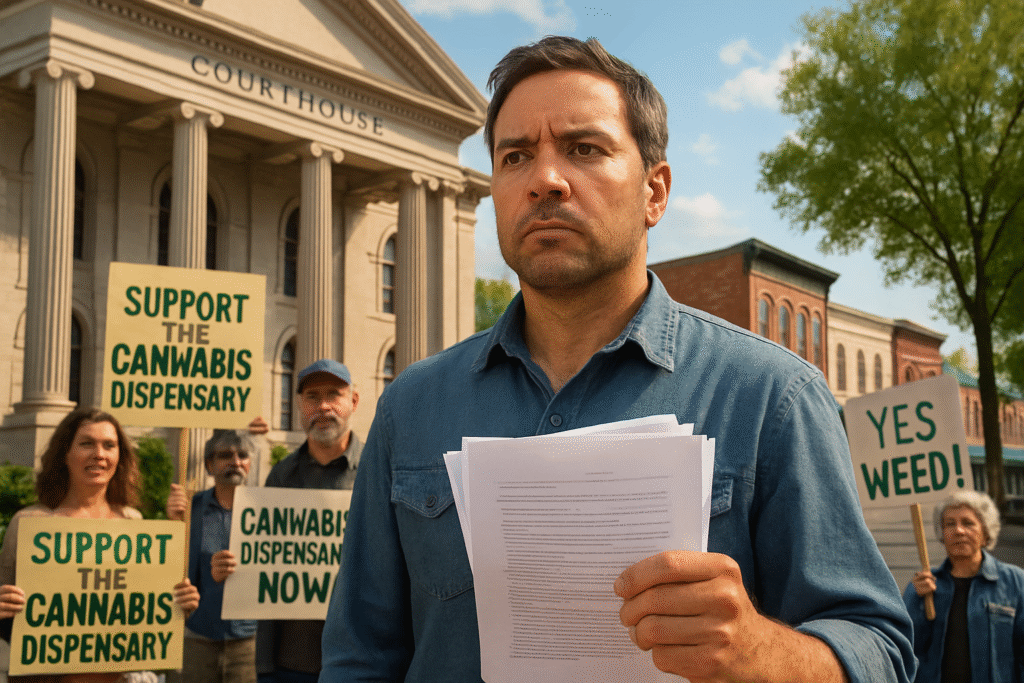
The city of Albert Lea finds itself at the crossroads of state cannabis legalization and local government resistance as a local entrepreneur challenges the city’s refusal to authorize his cannabis dispensary. Jacob Schlichter, who received his microbusiness license from the Minnesota Office of Cannabis Management in July, expected to open The Smoking Tree as Minnesota’s pioneer non-tribal recreational cannabis dispensary. However, a 4-3 vote by the Albert Lea City Council blocked the business registration despite state approval, igniting a legal battle that highlights the tension between state regulation and municipal authority.
This clash underscores the complex landscape that cannabis businesses face across the United States, where local governments often wield significant influence over the rollout of recreational marijuana. Schlichter’s lawsuit seeks to compel Albert Lea’s city government to comply with state policies, potentially setting a precedent for cannabis dispensaries wrestling with local opposition nationwide. As legal actions unfold, Albert Lea’s decision spotlights the regulatory hurdles that can stall business launches, even in states with permissive cannabis laws.
The dispute reveals broader issues around the evolving cannabis industry, including local economic interests, public health concerns, and regulatory ambiguities. It also reflects wider national conversations about cannabis normalization, the balance of power between state and city authorities, and how emerging legal markets can provide job opportunities and community revitalization. For stakeholders following the cannabis sector, this case exemplifies the challenges of navigating layered legal frameworks while striving to establish legitimate businesses.
Understanding the Legal Conflict Between Albert Lea and the Cannabis Dispensary Launch
The legal action initiated by Jacob Schlichter against the city of Albert Lea illuminates a contentious dispute at the intersection of state legalization efforts and local regulatory authority. Despite receiving a legal microbusiness license from Minnesota’s Office of Cannabis Management, Schlichter faced rejection at the municipal level when the city council voted 4-3 against registering The Smoking Tree.
This incident is a striking example of how local governments can exert significant control over cannabis business operations, even when state laws provide clear regulatory pathways. The legal battle arises from Albert Lea’s decision to block a state-licensed business from launching, raising questions about the limits of city government power versus state mandates in cannabis regulation.
The State vs. Local Regulatory Authority in Cannabis Dispensation
Cannabis regulation is generally shaped by state-level legislation, especially in states like Minnesota that have established recreational cannabis frameworks. However, local governments often retain the ability to influence or restrict cannabis businesses through zoning laws, licensing, and business permits.
In this case, the Albert Lea City Council’s refusal to approve a registration required for business operations effectively halts the dispensary’s launch despite the state-issued license. This creates a legal gray area that demands judicial interpretation regarding the supremacy of state cannabis law over local ordinances.
Key Legal Principles Underpinning the Lawsuit
- Preemption Doctrine: Whether state cannabis laws preempt local regulatory decisions, requiring city compliance with state-issued licenses.
- Due Process: Whether the city provided fair procedure and reasoning for denying the business registration.
- Equal Protection: Whether the city’s decision unfairly targets the cannabis business compared to other types of enterprises.
- Commerce Clause: Potential implications of local restrictions on interstate commerce and state economic policies supporting cannabis markets.
| Legal Issue | State Position | Albert Lea City Position | Potential Outcome |
|---|---|---|---|
| License Preemption | State license supersedes local denial | Local zoning and business permit control | Court could affirm state law, forcing city compliance |
| Due Process | Application met all regulatory requirements | City voted based on community concerns | Review of procedural fairness in denial |
| Equal Protection | Non-discriminatory licensing process | Targeted refusal against cannabis dispensary | Possible ruling on discriminatory practices |
| Commerce Clause | Support of legal cannabis commerce | Local restrictions impede economic activity | Evaluation of restrictions on commerce |
This legal conflict is part of a broader national debate mirrored in other jurisdictions where similar clashes between state cannabis frameworks and city governments arise. For more on how varied local stances affect cannabis markets, see our coverage on state-centric cannabis reform.
The Impact of Albert Lea’s Decision on Local Cannabis Entrepreneurs
Albert Lea’s refusal to register The Smoking Tree dispensary carries significant implications for cannabis entrepreneurs who seek to capitalize on Minnesota’s progressive cannabis market. The clash reveals the practical challenges business owners face when municipal governments oppose cannabis ventures, despite state-level licenses and regulatory approvals.
Challenges Entrepreneurs Encounter When Local Governments Block Cannabis Businesses
- Investment Risk: Entrepreneurs must consider potential instability if local governments can halt operations post-license.
- Legal Costs: Pursuing legal action incurs substantial expenses, diverting resources from business development.
- Operational Delays: Business launch timelines extend, impacting revenue projections and market positioning.
- Community Relations: Opposition may strain relationships with residents and stakeholders, complicating future engagements.
Jacob Schlichter’s lawsuit against Albert Lea serves as a pivotal example that will influence how cannabis dispensaries navigate regulatory hurdles. This situation mirrors challenges faced by entrepreneurs nationwide, documented extensively in regions like Massachusetts, where the cannabis market also wrestled with fluctuating local regulations, as detailed in Central Mass cannabis decline.
Strategies for Cannabis Businesses Facing Local Regulatory Resistance
- Legal Preparedness: Anticipating municipal challenges and securing legal counsel early.
- Community Outreach: Building relationships to gain local support and mitigate opposition.
- Advocacy and Lobbying: Engaging with policymakers to influence cannabis-friendly ordinances.
- Diversification: Expanding product lines to include medicinal cannabis and ancillary goods.
| Aspect | Impact on Cannabis Entrepreneurs | Recommended Approaches |
|---|---|---|
| Local Government Opposition | Business uncertainty and risks | Legal action and advocacy |
| Legal Costs | Reduced capital for operations | Budgeting legal reserves and seeking grants |
| Community Acceptance | Potential hostility or support | Education campaigns and partnerships |
| Business Launch Delays | Revenue loss and market share impact | Strategic planning and timeline management |
This entrenched opposition to cannabis is not exclusive to Albert Lea. Examining other regions with nascent cannabis industries, such as the cannabis industry job growth in Canada, illustrates the importance of aligning local and state regulations for smoother market integration, as noted in Cannabis industry jobs Canada.
How Local Government Policies Influence Cannabis Regulation and Dispensary Approval
The regulation of cannabis businesses is often a patchwork of state laws and local ordinances, where city governments play a crucial gatekeeping role. Albert Lea’s decision to deny registration to The Smoking Tree despite state licensing is emblematic of how local policy can shape the cannabis landscape.
Key Factors in Municipal Decision-Making on Cannabis Dispensaries
- Zoning Restrictions: Limits on where cannabis dispensaries can operate within city boundaries.
- Licensing Procedures: Additional permits or registrations required beyond state licensing.
- Community Safety Concerns: Crime, youth access, and public health considerations often cited.
- Political Climate: Local governance attitudes toward cannabis influence policy rigor.
These factors contribute to a decentralized regulatory landscape that can complicate business launches. Albert Lea’s city council articulated concerns specific to community impact that drove the narrow vote against the dispensary. Understanding these local conditions is essential for any cannabis operation planning market entry.
| Policy Aspect | Potential City Government Considerations | Impact on Cannabis Dispensaries |
|---|---|---|
| Zoning Laws | Proximity to schools, churches, residential zones | Restricts viable locations for dispensaries |
| Licensing & Registration | Additional fee structures, background checks | Lengthens approval process; may disqualify businesses |
| Public Health & Safety | Concerns over youth access and crime rates | Motivates stricter regulation or bans |
| Community Feedback | Resident opinions and petitions | Can swing council votes on dispensary approval |
For deeper insights into regulatory variances and community impact, consider reading our feature on New York emergency cannabis admissions and policy reactions. These local factors frequently dictate whether a cannabis business can establish roots within a municipality.
The Economic and Social Ramifications of Cannabis Business Restrictions in Albert Lea
The blocking of The Smoking Tree dispensary not only affects the local entrepreneur but also has broader economic and social consequences for Albert Lea. The refusal curtails potential tax revenues, job creation, and economic diversification linked to the burgeoning recreational marijuana industry.
Economic Effects of Denying Cannabis Dispensary Launch
- Loss of Tax Revenue: Cannabis sales generate significant tax funds for public services.
- Job Creation Opportunities: Dispensaries create a variety of direct and indirect employment roles.
- Business Ecosystem Development: Support industries such as security, marketing, and agriculture benefit.
- Economic Diversification: Marijuana industry provides new growth sectors in local economies.
By contrast, cities that embrace cannabis legalization have witnessed improved economic metrics, as seen in Missouri’s expanding cannabis sales sector detailed at Missouri cannabis sales products. Albert Lea’s stance potentially delays similar benefits for its residents and regional stakeholders.
Social Dimensions and Community Impact
Opposition to cannabis dispensaries often stems from concerns over social consequences, including fears about increased youth access, substance abuse, and changes to community character. However, numerous studies indicate that regulated cannabis dispensaries can operate safely within communities with proper oversight.
- Public Health Monitoring: Regulation provides frameworks to reduce unregulated consumption.
- Community Education: Promotes informed consumption and awareness about medical cannabis uses.
- Crime Rate Studies: Data from various states suggest no significant increase in crime related to dispensaries.
- Potential Social Equity: Cannabis businesses can promote restorative justice and economic inclusion.
| Impact Area | Positive Aspects | Common Community Concerns | Evidence & Mitigation |
|---|---|---|---|
| Tax Revenue | Funds infrastructure, education, healthcare | Concerns about voluntary spending on cannabis | Tax earmarks for community programs |
| Employment | Diverse job creation, from retail to logistics | Questioning job quality | Employment standards and training programs |
| Public Safety | Regulated sales prevent illicit market growth | Fear of increased crime and impaired driving | Strict enforcement and education |
| Social Equity | Inclusion and community investment | Distrust among affected communities | Equity programs and grant funding |
The interplay of economic development and social responsibility is critical. Albert Lea’s decision may delay potential advantages identified in other cannabis markets, such as those in Thailand’s recent cannabis industry revitalization outlined in Thailand cannabis revitalization.

Legal Action and Broader Cannabis Industry Implications from Albert Lea’s Cannabis Controversy
Jacob Schlichter’s decision to file a lawsuit against Albert Lea not only challenges a single city council’s decision but also symbolizes the ongoing national struggle between cannabis industry growth and entrenched local opposition. This case will influence future legal interpretations and could motivate other entrepreneurs facing similar local obstacles.
Broader Industry Impact of the Lawsuit
- Precedent Setting: Court rulings may clarify the reach of local authority in cannabis licensing.
- Investor Confidence: Legal clarity supports investment in the cannabis sector, reducing risks.
- Regulatory Harmonization: Potential push for alignment between state and local policies to ease business operation.
- Market Expansion: Successful legal challenges encourage industry growth and diversify access.
Emerging Trends in Cannabis Legal Conflicts
- Increasing lawsuits against municipalities denying dispensary licenses despite state approvals.
- Legislative efforts aiming to curb local veto powers over cannabis business registrations.
- Growing role of advocacy groups in shaping pro-cannabis policies at city and county levels.
- Integration of cannabis businesses into broader economic recovery programs post-pandemic.
| Trend | Explanation | Example |
|---|---|---|
| Municipal Lawsuits | Legal challenges to city cannabis denials | Albert Lea lawsuit for The Smoking Tree |
| Legislative Reforms | Lawmakers considering state-level restrictions on local vetoes | Proposals in states with cannabis markets like New York |
| Advocacy Influence | Grassroots and professional groups shaping policy | Coalitions in California and Colorado |
| Economic Recovery Ties | Linking cannabis business growth with post-pandemic recovery | Stimulus programs supporting cannabis sectors |
Understanding how legal battles like Albert Lea’s impact the cannabis industry mirrors national patterns where businesses, governments, and advocates negotiate evolving frameworks. For a wider perspective, explore our analysis on Trump era cannabis law easing and its aftermath.
Frequently Asked Questions about Cannabis Dispensary Legal Action in Albert Lea
- Q1: Why did Albert Lea deny the registration despite state licensing?
The City Council cited community concerns and local regulatory authority over business permits, asserting that their decision reflected municipal governance prerogatives despite state-level cannabis legalization.
- Q2: What legal grounds does Jacob Schlichter have for his lawsuit?
His lawsuit is based on the premise that state cannabis licensing preempts local denials, alleging that Albert Lea’s action violates due process and equal protection rights under the law.
- Q3: How could this lawsuit affect other cannabis businesses in Minnesota?
A favorable court ruling for Schlichter could restrict municipalities’ ability to block state-licensed cannabis businesses, enabling smoother business launches statewide.
- Q4: Are there examples of cities permitting cannabis dispensaries despite local opposition?
Yes. Cities like Denver and Seattle have navigated initial community resistance through robust regulatory frameworks, offering models for balancing business operations and local concerns.
- Q5: What strategies can cannabis entrepreneurs use to address local government pushback?
Entrepreneurs are advised to engage in early community dialogue, maintain legal preparedness, advocate through local policy channels, and diversify product offerings.