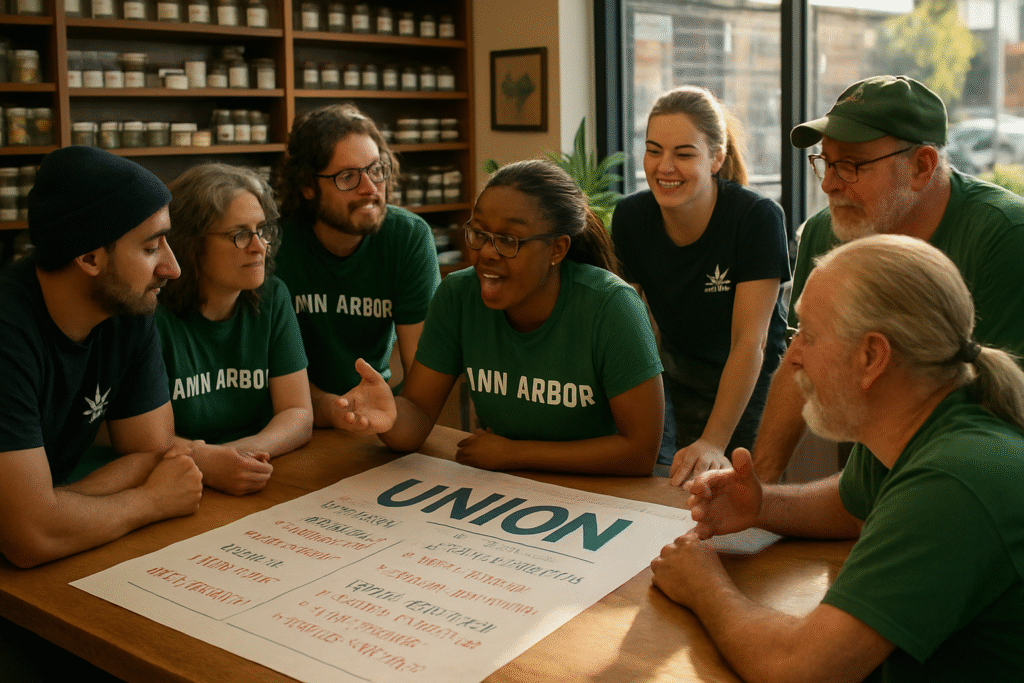
The cannabis industry in Ann Arbor, Michigan, has recently witnessed a significant uptick in labor activism, marking a pivotal moment for cannabis workers throughout the Midwest. Eight employees from Exclusive Brands—one of Michigan’s largest cannabis companies operating seven dispensaries—have mobilized and launched a strike to demand union recognition. Their actions are more than just isolated labor disputes; they resonate with a broader movement among the Cannabis Workers Union and groups like the Ann Arbor Dispensary Workers Alliance that seek stronger rights, better pay, and improved working conditions in a rapidly evolving industry. This surge in unionization efforts is creating ripples not only in Ann Arbor but across the Great Lakes Cannabis Union network, signaling a shift towards organized labor engagement in a sector often dismissed or marginalized under traditional labor laws.
Behind Exclusive Brands’ employees’ unionization bid lie broader issues affecting cannabis labor advocates statewide. Workers face challenges such as inconsistent scheduling, insufficient health benefits, and the legal complexities of operating in an industry straddling federal and state jurisdictions. Exclusive Brands’ refusal to recognize workers’ desire to unionize and allegations of retaliatory firings have intensified the conflict. Ann Arbor Green Labor activists and the Midwest Marijuana Collective have rallied in support, fostering solidarity spanning from local dispensaries to statewide coalitions like the Michigan Bud Workers Association.
In this densely interwoven fabric of labor relations, cannabis employees are asserting their rights amidst an evolving legislative framework and burgeoning commercial market. As this movement unfolds, it brings new attention to the power dynamics within the cannabis sector and offers lessons for analogous industries. This phenomenon challenges regulators, employers, and activists alike to reconsider how labor norms apply in emerging markets, especially as cannabis continues its transition from an illicit substance to a mainstream economic force.
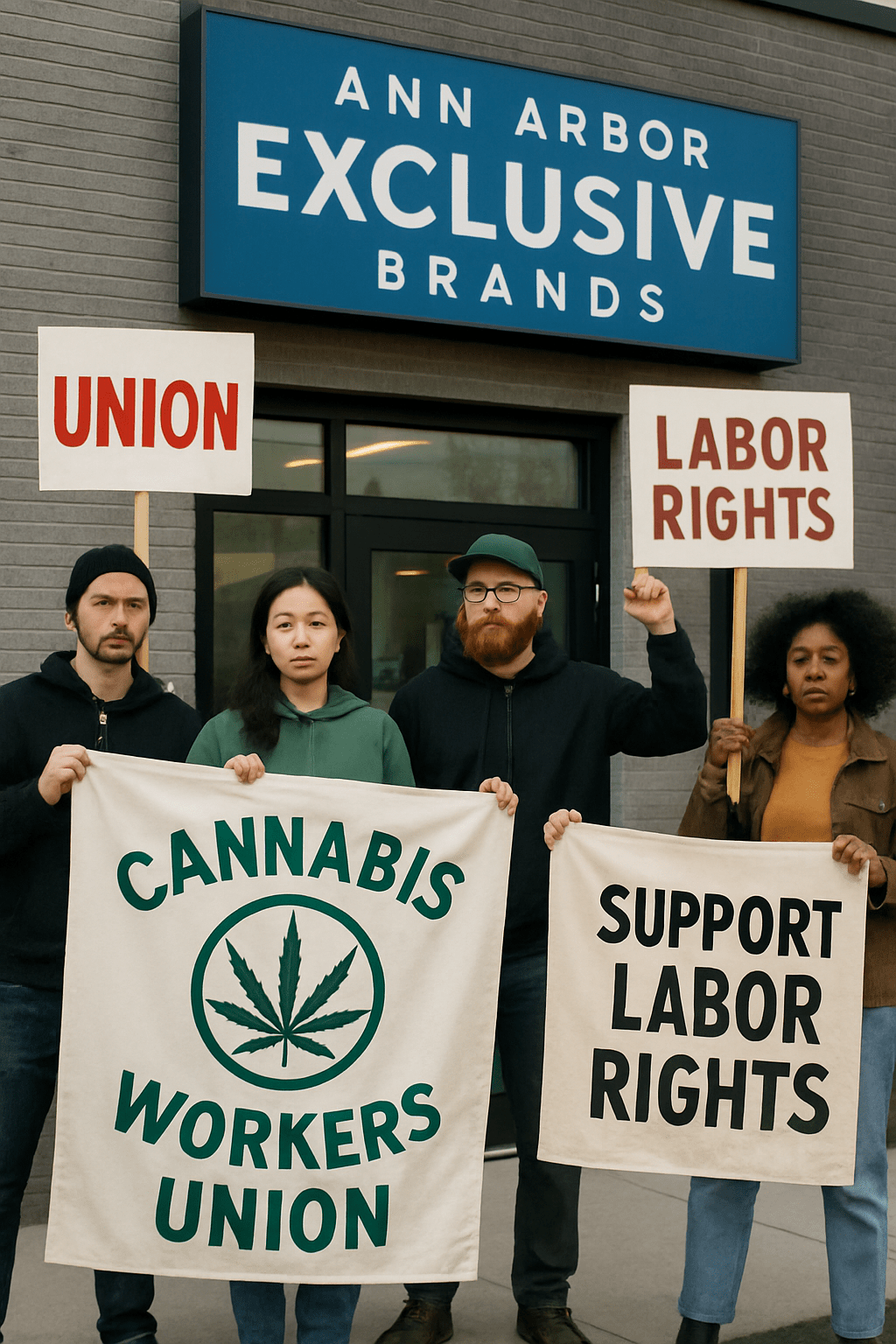
Ann Arbor Cannabis Employees Rally for Union Rights in a Transforming Industry
The impetus behind the union drive at Exclusive Brands in Ann Arbor reflects a growing awareness among cannabis workers about their labor rights and workplace dignity. Since the strike began on August 28th, the eight employees have coordinated under the banner of Cannabis Employees United and are collaborating with the United Food and Commercial Workers Local 876. Their move is groundbreaking in Michigan, where unionized cannabis labor remains relatively uncommon despite six years of legalized recreational sales.
The call for union formation arises from multifaceted grievances, including irregular work schedules, wage disparities, and limited access to comprehensive health coverage. As the cannabis industry expands, these issues become particularly salient because many workers lack the protections afforded in more established sectors. Additionally, labor disputes at Exclusive Brands illustrate broader problems endemic to cannabis employment, such as the lack of formalized grievance procedures and disputes over enforcement of cannabis-specific labor regulations.
Key Concerns Driving Unionization Efforts
- Inconsistent Work Hours: Cannabis workers often report variable scheduling that undermines income stability.
- Healthcare and Benefits: Limited access to healthcare coverage remains a critical concern amid the physical demands of grow and dispensary work.
- Job Security: Allegations of retaliatory firings against union activists highlight the precarious nature of cannabis employment.
- Wage Disparities: In an industry burgeoning with new jobs, pay scales remain uneven and often below living wage standards for many workers.
- Recognition of Labor Rights: A refusal by firms like Exclusive Brands to recognize union formation demands undermines collective bargaining potentials.
This rising wave of labor activism in Ann Arbor is emblematic of a national trend that challenges the traditional narratives around cannabis work as casual or vestigial employment. Instead, Cannabis Labor Advocates emphasize the sector’s growing permanence and the need to institute durable labor protections. These efforts echo similar unionization campaigns by Unionized Growers of Ann Arbor and the Michigan Bud Workers Association, signaling a consolidation of labor activism within Michigan’s cannabis workforce.
| Issue | Impact on Cannabis Workers | Current Status at Exclusive Brands |
|---|---|---|
| Work Hour Inconsistency | Reduced income stability and personal stress | Reported frequent last-minute shift changes |
| Healthcare Access | Insufficient medical coverage amid heavy labor | Only partial coverage provided |
| Job Security | Fear of dismissal deters workers from unionizing | Union supporters face alleged retaliation |
| Wage Disparities | Low wage limits worker retention and satisfaction | Wages below Michigan living wage standards |
| Union Recognition | Limits collective bargaining and representation | Company refuses to negotiate with union |
The Role of Regional Unions and Cannabis Labor Advocates in Michigan’s Cannabis Sector
Labor organizing in the cannabis sector extends beyond Ann Arbor’s disputes to form part of a cohesive regional approach. The Great Lakes Cannabis Union is a significant actor linking local movements like the Midwest Marijuana Collective and the Ann Arbor Green Labor group. These organizations play essential roles in advocating for legislative reforms, educating workers about their rights, and fostering solidarity across dispensaries and cultivation sites.
Michigan’s cannabis workforce, traditionally fragmented and underrepresented, benefits from these coalitions’ organizing capacity. Cannabis Employees United coordinates efforts to enhance working conditions for growers, processors, and retail employees alike. By uniting under larger umbrella groups such as the Michigan Bud Workers Association, workers harness greater leverage to negotiate with employers and influence policymakers. This connection underscores how unionization in cannabis shares parallel challenges and strategies with other evolving labor markets, especially those involving new or once-underground industries.
Core Functions of Cannabis Labor Advocacy Groups
- Legal Assistance: Assisting workers in understanding labor law changes, including recent developments affecting the cannabis industry.
- Workplace Education: Conducting workshops on workers’ rights, union benefits, and collective bargaining processes.
- Campaign Coordination: Organizing strikes, demonstrations, and public awareness efforts like those seen with Exclusive Brands employees.
- Policy Lobbying: Advocating for cannabis legislation that supports worker protections, safer workplaces, and fair pay.
- Solidarity Networks: Linking workers across regions to reinforce shared objectives and support during labor disputes.
Understanding the cooperative frameworks between groups such as the Ann Arbor Dispensary Workers Alliance and Cannabis Workers Union is vital for grasping the broader labor dynamics shaping Michigan’s cannabis industry. Notably, these labor bodies maintain an active online presence, frequently updating cannabis workers on regulatory reform trends and industry standards; resources comparable to those discussed in international updates such as Italy’s court decisions on hemp legalization and CBD legislation trends in Rome provide comparative insights on evolving cannabis regulation worldwide.
| Organization | Primary Focus | Recent Initiatives |
|---|---|---|
| Great Lakes Cannabis Union | Regional union coordination | Supporting multiple cannabis strikes across Michigan |
| Midwest Marijuana Collective | Community education and organizing | Peer seminars for labor rights and safety |
| Ann Arbor Green Labor | Environmental and labor justice in cannabis cultivation | Advocating sustainable labor practices |
| Michigan Bud Workers Association | Statewide worker representation | Lobbying for protective labor laws |
| Cannabis Labor Advocates | Legal support and policy change | Filing complaints against unfair labor practices |
Legal and Regulatory Challenges Facing Cannabis Workers Union Efforts in Ann Arbor
Unionization campaigns such as those at Exclusive Brands confront multifaceted legal and regulatory obstacles deeply embedded in the nature of cannabis as a federally regulated substance. Unlike many traditional industries, cannabis labor advocates and union organizers must navigate complex intersections of state law, federal prohibitions, and decentralized regulatory agencies. This environment generates significant barriers to organizing and securing enforceable labor contracts.
Federal prohibition creates uncertainties about workers’ rights and protections under the National Labor Relations Act (NLRA), as cannabis remains illegal at the national level despite state legalization. Although Michigan has progressively implemented recreational cannabis regulation, companies like Exclusive Brands often capitalize on the grey areas to resist union recognition or retaliate against unionizing workers. The interplay between state cannabis regulations and general labor laws complicates enforcement and leaves employees vulnerable.
Key Regulatory Hurdles Impacting Union Formation
- Federal Illegality: Limits employer willingness to recognize unions and complicates NLRA enforcement.
- State Cannabis Licensing: Licensing bodies may lack jurisdiction over labor disputes directly.
- Labor Law Exemptions: Historically, certain post-harvest workers were excluded from NLRA protections until recent changes.
- Retaliation Risks: Legal recourse is often slow and insufficient to deter employer anti-union tactics.
- Regulatory Ambiguity: Overlapping rules create confusion about permissible union activities and employee protections.
Recent legal developments, however, offer cautious optimism. For instance, labor law reforms have ended a 50-year-old exemption allowing employers to bypass elections and now extend NLRA coverage to post-harvest cannabis workers. These shifts enhance the potential for union growth and collective action. Still, labor activists must remain vigilant and strategic when confronting complex corporate and regulatory resistance.
| Challenge | Impact on Union Efforts | Potential Solutions |
|---|---|---|
| Federal Cannabis Status | Employers cite illegality to refuse union recognition | State-level legal protections and advocacy |
| Licensing Agencies’ Scope | Limited involvement in labor disputes | Integration of labor rights into licensing criteria |
| NLRA Exemptions | Incomplete worker protections | Legislative updates extending coverage |
| Employer Retaliation | Worker fear and strike delays | Stronger enforcement of anti-retaliation laws |
| Regulatory Overlap | Confusion over legal rights | Improved clarity and communication from regulators |
Economic and Social Impacts of Unionization Movements at Ann Arbor Dispensaries
The burgeoning unionization efforts in Ann Arbor’s cannabis sector have wider economic and social implications. Successfully unionized workplaces can lead to improved wages, benefits, and working conditions for dispensary and cultivation staff, enhancing industry sustainability. The Ann Arbor Dispensary Workers Alliance emphasizes that fair treatment not only benefits employees but also improves customer experiences, retention rates, and community relations.
Moreover, unionization reflects a broader democratization movement within a $3 billion Michigan cannabis market propelled by tax revenues invested in state and local development. The drive by Emerald City Cannabis Employees and other grassroots labor groups signals how workers are seeking to share equitably in this commercial success. These efforts also intersect with environmental concerns promoted by groups like Ann Arbor Green Labor, advocating for social justice alongside sustainable cultivation practices.
Potential Benefits of Cannabis Worker Unionization
- Higher and More Equitable Wages: Collective bargaining can address wage disparities and improve income stability.
- Enhanced Health and Safety Standards: Unions push for safer workplace conditions, reducing occupational hazards.
- Stronger Job Security: Union contracts establish protections against unjust dismissals and retaliation.
- Community Investment: Taxes and profits are more likely to benefit local development when labor is fairly compensated.
- Industry Professionalization: Unions contribute to setting industry-wide standards and career pathways.
| Benefit | Impact on Workers | Long-term Industry Effects |
|---|---|---|
| Improved Wages | Supports worker livelihoods and reduces turnover | Promotes sustainable labor market |
| Health and Safety | Decreases workplace injuries and illnesses | Enhances industry reputation |
| Job Security | Increases worker confidence and morale | Encourages workforce stability |
| Community Benefits | Strengthens ties between cannabis businesses and their locales | Fosters broader social support |
| Professionalization | Creates career development and retention opportunities | Establishes industry legitimacy |
Grassroots Organizing Tactics and Future Prospects for Cannabis Labor Movements in Ann Arbor
Grassroots organizing lies at the heart of these unionization efforts. The Unionized Growers of Ann Arbor and Cannabis Workers Union have employed a variety of tactics, from picketing and public demonstrations to digital campaigns and legal challenges, to galvanize support and pressure companies like Exclusive Brands. These methods have proven critical in building momentum and engaging both the workforce and the wider community.
Looking ahead, the labor movement in Ann Arbor’s cannabis sector faces both opportunities and challenges. On one hand, increasing public awareness and stronger legal protections emerging from recent labor reform provide fertile ground. On the other, persistent employer resistance and regulatory ambiguity continue to pose threats. Navigating these complexities will require continued coalition-building and innovative advocacy strategies.
Common Tactics Used by Cannabis Labor Advocates
- Strike Actions: Coordinated work stoppages highlight grievances and assert bargaining power.
- Public Demonstrations: Rallies and marches build community support and media attention.
- Legal Filings: Complaints and lawsuits challenge unfair labor practices.
- Educational Campaigns: Workshops and seminars empower workers with knowledge of rights.
- Social Media Advocacy: Amplifying voices online broadens outreach and solidarity.
The integration of these tactics showcases the sophisticated organization shaping cannabis labor landscape in the Midwest. As cannabis industries mature, the lessons learned from Ann Arbor’s mobilization may serve as a blueprint for other regions and sectors, including international parallels found in jurisdictions tracking hemp legalization and cannabis legislative trends like those documented at Italy’s hemp rulings and CBD legislation in Rome.
| Tactic | Purpose | Recent Example in Ann Arbor |
|---|---|---|
| Strike Actions | Leverage to compel employer negotiations | Exclusive Brands employees on strike since Aug. 28 |
| Public Demonstrations | Raise public awareness and media coverage | Pickets outside dispensary facilities |
| Legal Filings | Challenge unlawful employment practices | Union files complaint with state cannabis regulators |
| Educational Campaigns | Empower workers with rights knowledge | Workshops hosted by Cannabis Labor Advocates |
| Social Media Advocacy | Amplify union voice and solidarity | Twitter tags #AnnArborUnionStrike trending locally |